It’s taken some serious thinking, but you’ve decided that it’s time to move on from your current job. Once you break the news to your manager, you’ll be busy getting your affairs in order; from wrapping up loose ends to packing up your desk and saying your goodbyes to your colleagues. But before you clock out for the last time, you might’ve been asked by management to attend one final meeting: your exit interview.
While you might be tempted to just wing this final talk and get it out of the way, this is actually one meeting you don’t want to underestimate, especially since it could have an impact on your career later down the line.
Exit interviews: a primer
As the name suggests, exit interviews are conducted whenever an employee leaves the company, and can be done in a formal or semi-formal setting. In most cases, the interviews are often conducted by HR, who use this interview to gather insight on your experience working at the company, and the reason for your departure. Here’s a few reasons why data from exit interviews are beneficial for employers:
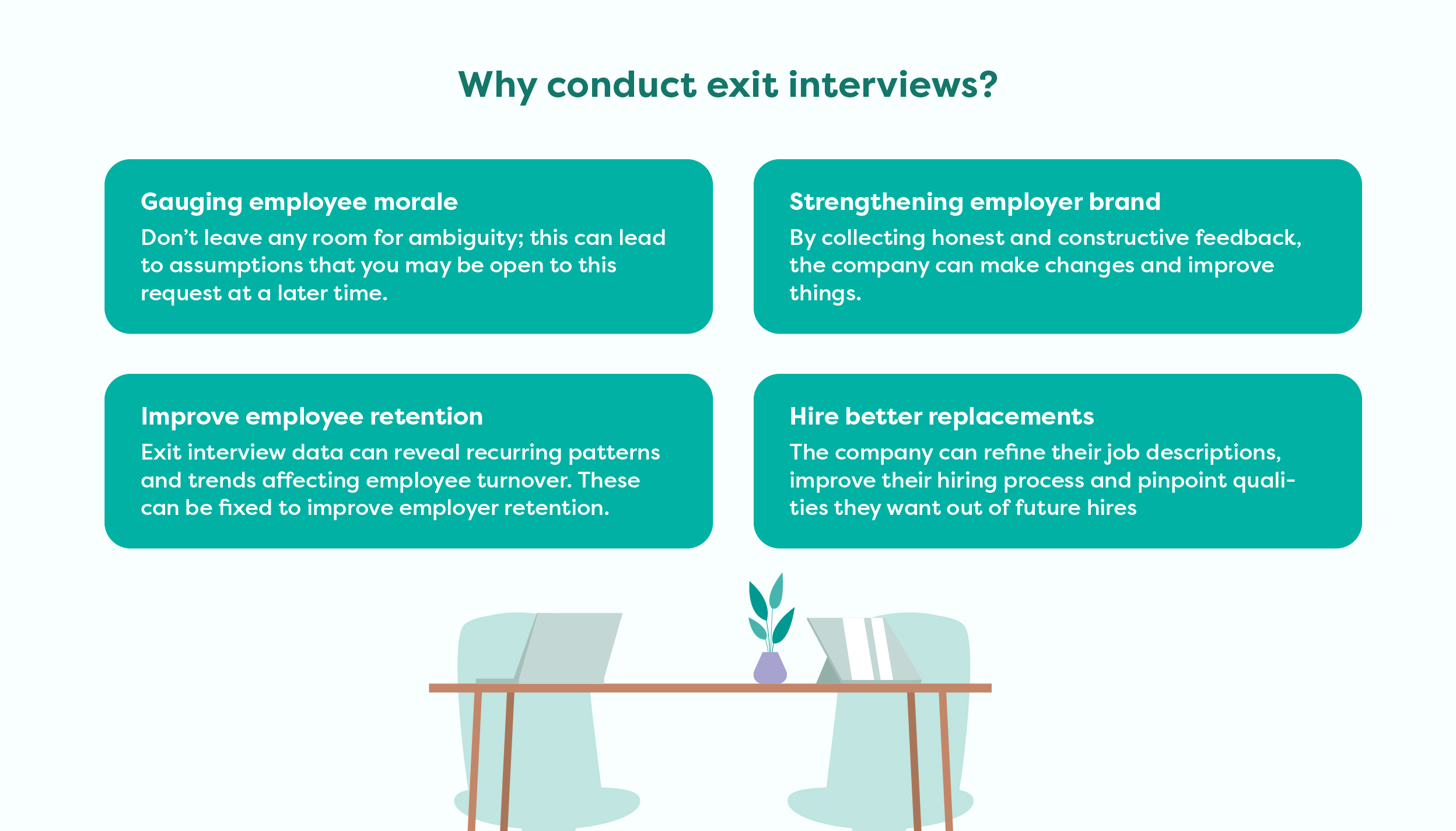
Think of it like a satisfaction survey: your feedback helps your employer identify areas of improvement for the organisation in order to improve itself moving forward.
Why it matters (for you)
So, exit interviews are helpful for companies, but what’s in it for you? With you already having one foot out of the door, it can be hard to feel particularly excited about this last meeting. Alternatively, you might even see it as your last chance to air out any last grievances about your job before you leave it all behind.
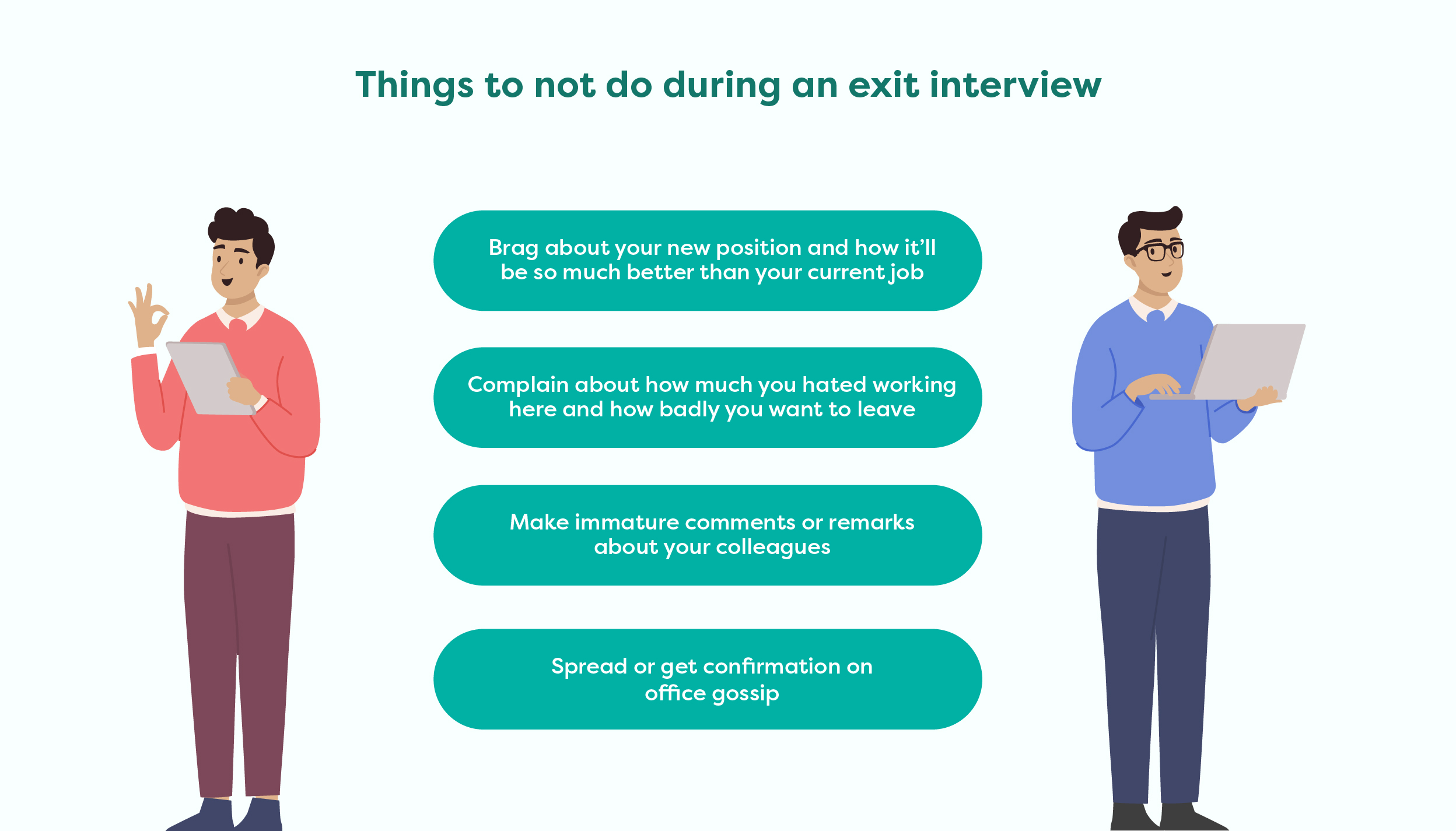
That catharsis might feel good in the moment, but the burned bridges and damaged relationships left behind as a result could hurt your future success. For example, you’ll be hard-pressed to get your ex-employer to provide you with any references, and word of your behaviour could spread to other companies, leading you to be treated with caution even before you send in your job application!
Remember, the way you handle your exit interview will reflect on your profession brand and reputation, so be careful and watch your words.
Making preparations
With the previous point in mind, it’s probably in your best interest to take your exit interview as seriously as you would for a new job. Regardless of the circumstances behind your departure, you should approach this last hurdle in a calm and constructive manner.
Here are a few things you can do for yourself to make this process as smooth as possible.
1. Ask some questions
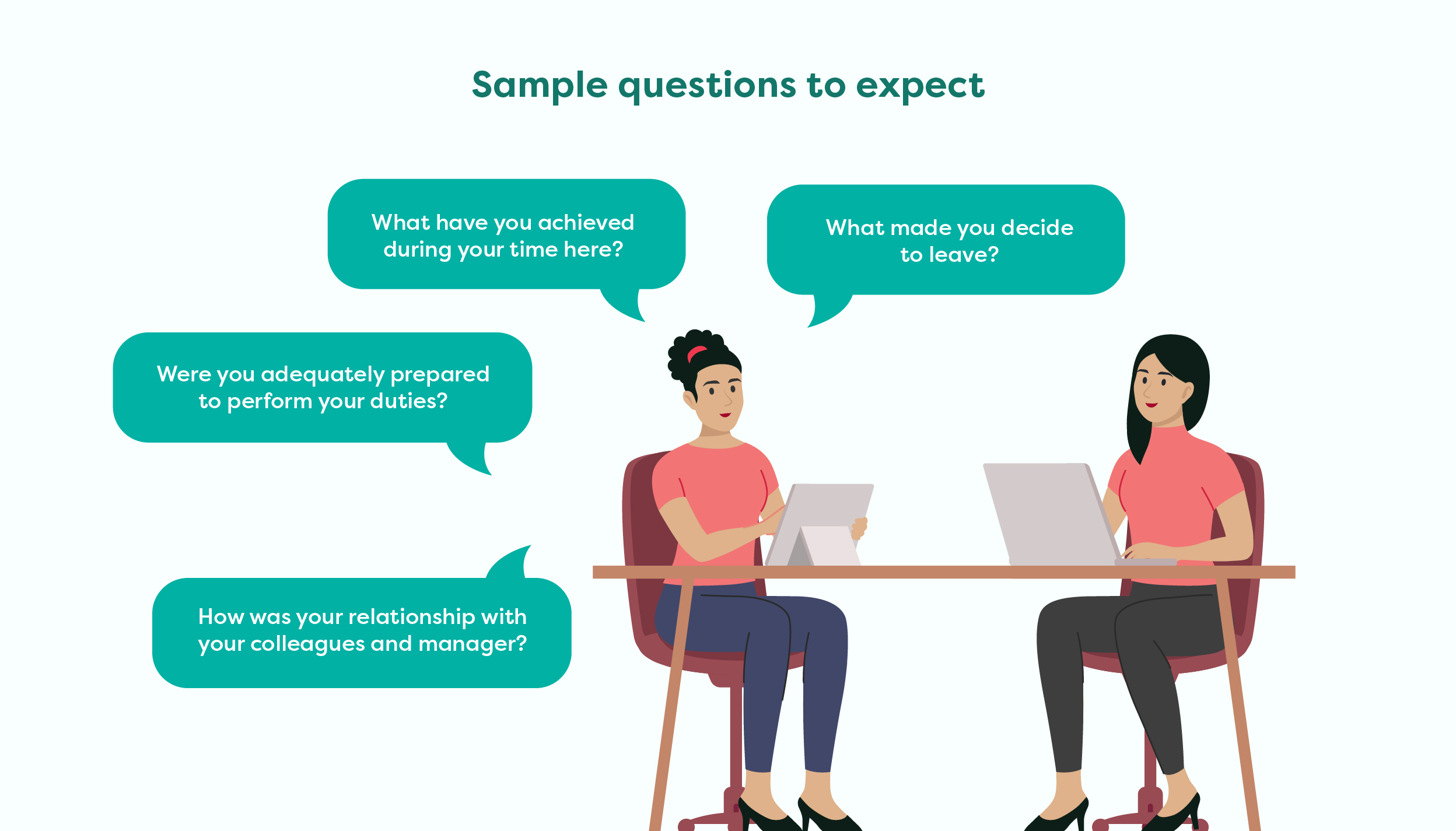
While HR or supervisor will have plenty to ask you during your interview, there’s no stopping you from doing your own research in advance. For example, you can check on who’ll be conducting the interview, what its objectives are, and whether your responses will be kept confidential. Knowing all of this ahead of time can help you better plan out your answers in advance.
Your inquiries don’t have to be focused on the exit interview either. You can also use this opportunity to get any final clarifications on your next steps before you officially leave the company. For example, when you’ll need to return any company equipment (such as your laptop or tablet) or when you can expect your final paycheque to come in.
2. Do some self-reflection
First, take some time to step back and reflect on your overall experience working at the company, both positive and negative. Ideally, you can also use pen and paper to list down everything you can think of, such as what parts of the job you enjoyed and areas where you think could be improved.
This will help you identify key areas you may want to bring up during the exit interview, and in turn help you provide more meaningful feedback. If you’re having a hard time remembering (especially if you’ve been around for a good while), you can refresh your memory by looking through past performance reviews, awards and other documents.
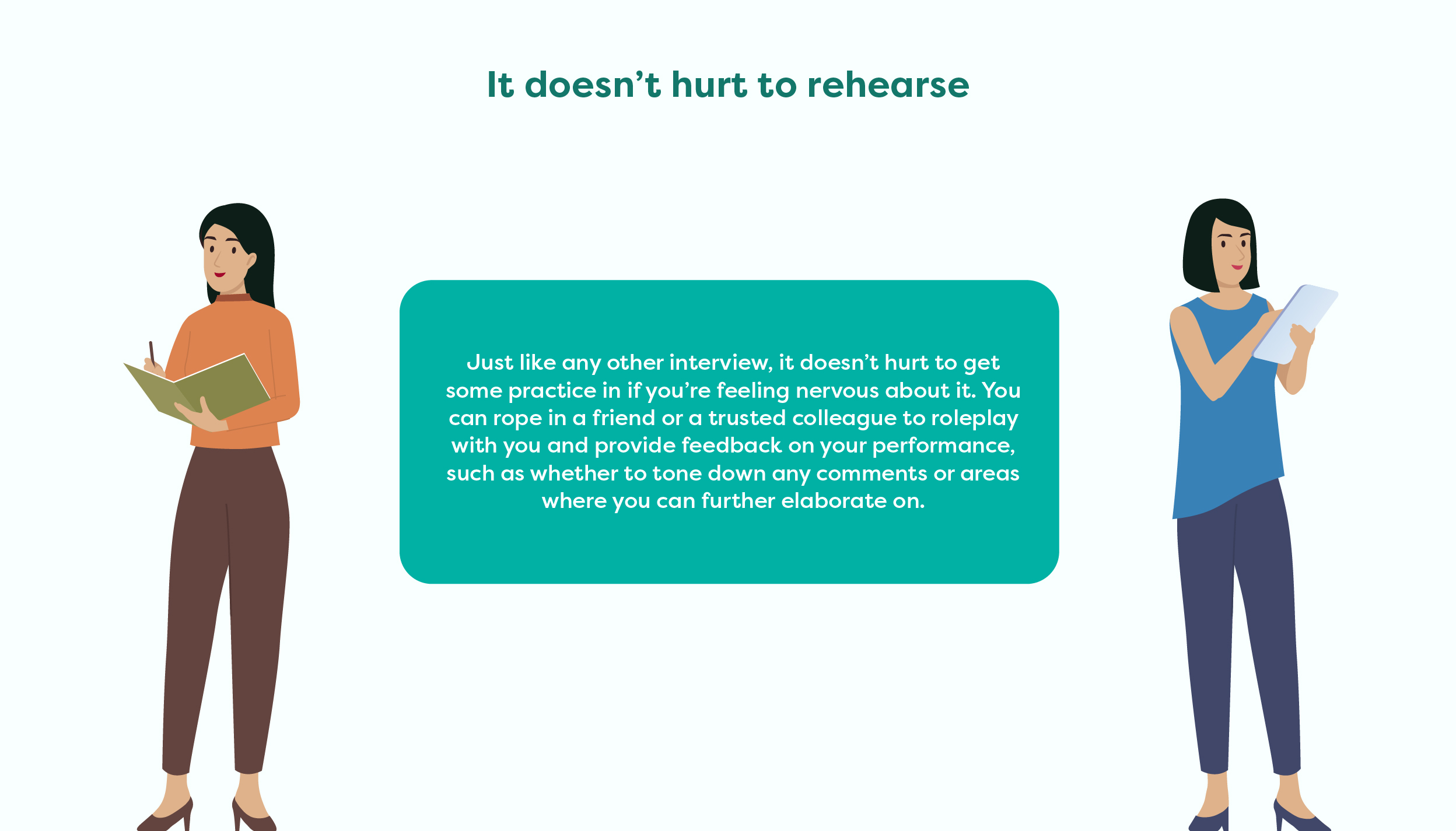
3. Stay professional
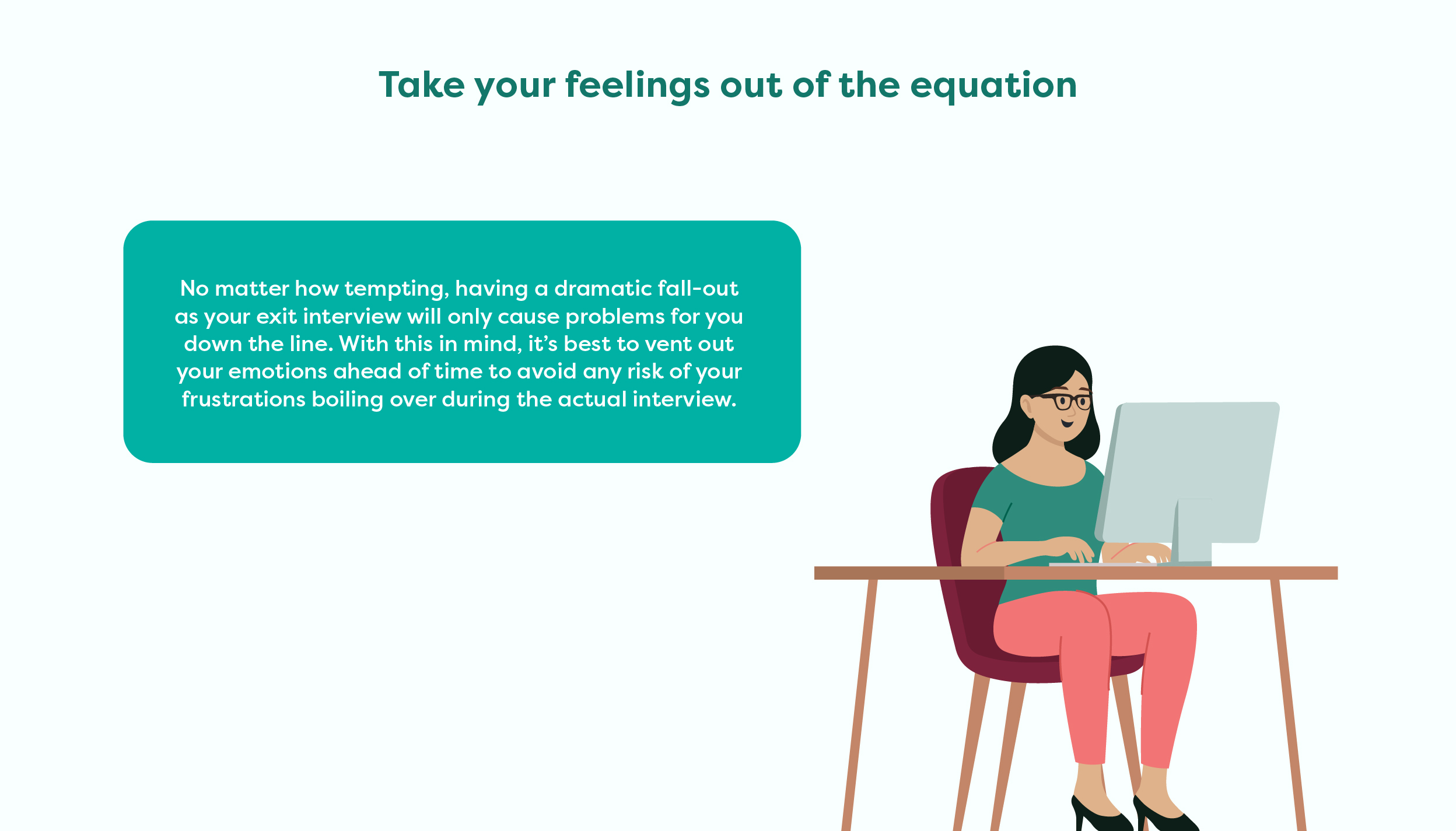
This can be particularly challenging if you’re leaving the company for negative reasons, but it’s important to remember that exit interviews are not the place to vent all your grievances about the company. Maintain a positive-to-neutral attitude throughout the session, and focus your feedback around your job and the company rather than resorting to personal attacks and insults. This ensures that your feedback has a better chance of being heard and acted upon in due time.
Knowing how to handle your exit interview ensures that you’ll be able to keep things amicable (or at least neutral) with your soon-to-be former company and colleagues. After all, you never know when your paths may cross again, and it’s always better to leave doors open for future networking, mentoring or career opportunities.
Plus, by closing this chapter on your life on a positive note, you’ll be in a better headspace to move forward to greener pastures with your head held high.