Fighting fires at work isn’t unique to any one organisation. Occasional bouts of miscommunication between stakeholders, for instance, is a common problem every company faces and must address.
So, if you want to keep your part of the work running smoothly, you’ll need to fight these fires effectively. Here’s some advice on how to do so!
What is "firefighting at work"?
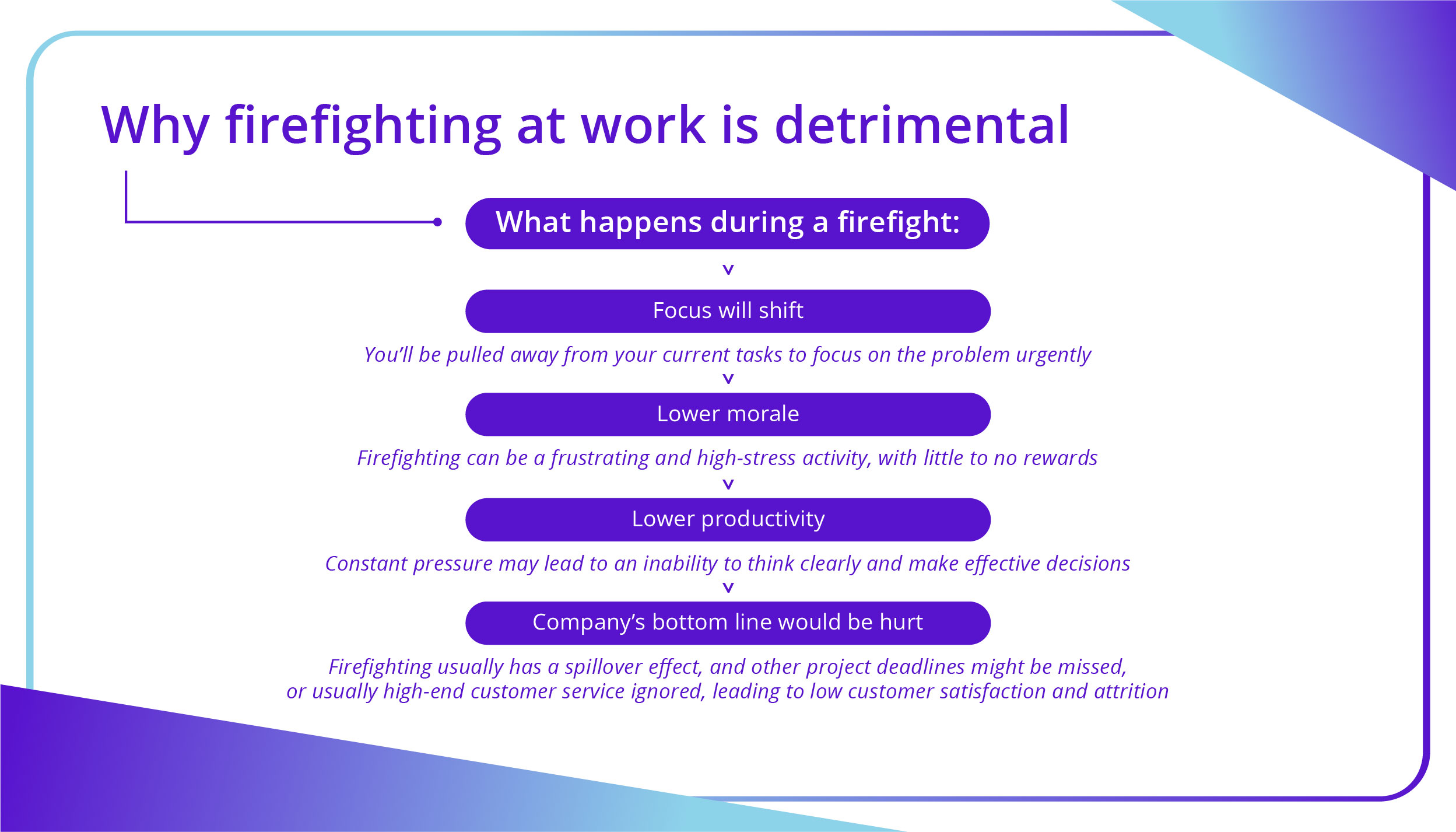
At its core, firefighting at work is a reactive management style that focuses on correcting problems as they crop up.
But before you start thinking too badly of firefighting as a whole, keep in mind that some fires can’t be avoided, and can still happen even with preventive measures in place – cybersecurity attacks that result in stolen information is one such example. Even with enough foresight and good standard operating procedures (SOPs) in place, unforeseen circumstances must still be addressed appropriately and professionally.
#1: Keep calm
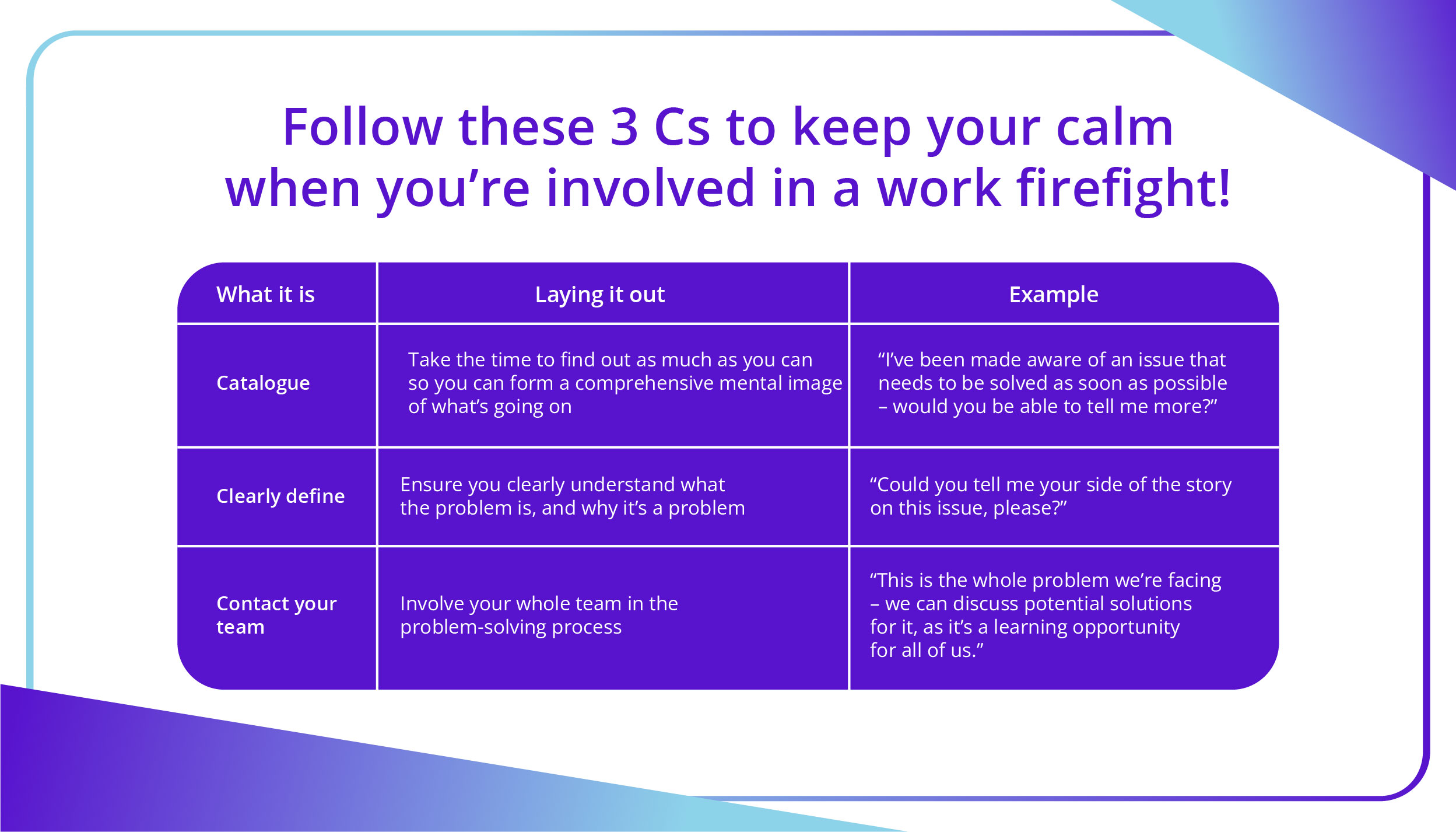
Most of the time, your feelings of panic will stem from a lack of information, coupled with urgency and relatively short timeframes to solve problems. To that end, one of the best ways to keep your calm and tackle an issue effectively is to first gather as much information as you can.
Not only will it help you better deal with the brunt of the problem, but a side benefit is that you can also give yourself some breathing room to get your emotions back under control!
Tip: Problems are finite, and tend to be specific to your industry, so keep your focus narrowed.
#2: Use all your resources
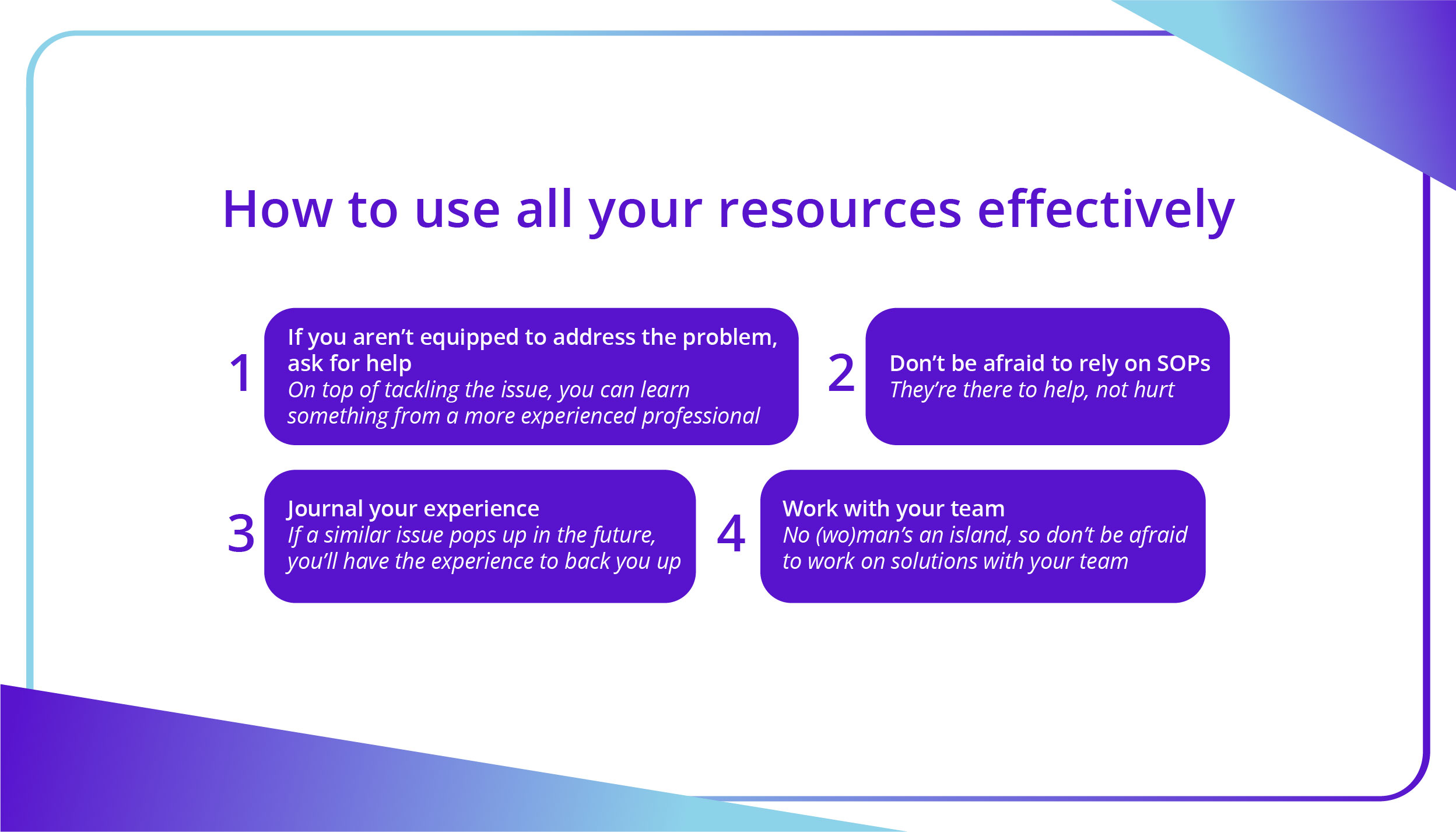
It doesn’t matter whether you work for a multinational corporation (MNC) or small- to medium-sized enterprise (SME) – chances are, you have some resources at your disposal. So, don’t be afraid to leverage them to help you deal with the problem as efficiently and cleanly as possible!
For instance, if a cyberattack has penetrated your company’s firewall and implicated customer accounts, don’t immediately resort to sending out panicked emails to those affected. Instead, you can approach the person in charge of cybersecurity and ask them to lay out the issue and proposed solution clearly, before coming up with a suitable email to send out with your team.
#3: Keep an eye on the time
Just because you’re firefighting at work doesn’t mean that you should do so at the expense of your other tasks! Your planned tasks may be just as important as the issue you’re working on, so be sure to take some time to address them, too.
Moreover, turning your attention away from the fire for a while can give you a chance to regroup and decompress after a morning – or afternoon – of high stress.
Tip: Your colleagues will understand if you need to leave the situation for a while – they’ve likely had their own share of encounters with firefighting and its negative effects, as well.
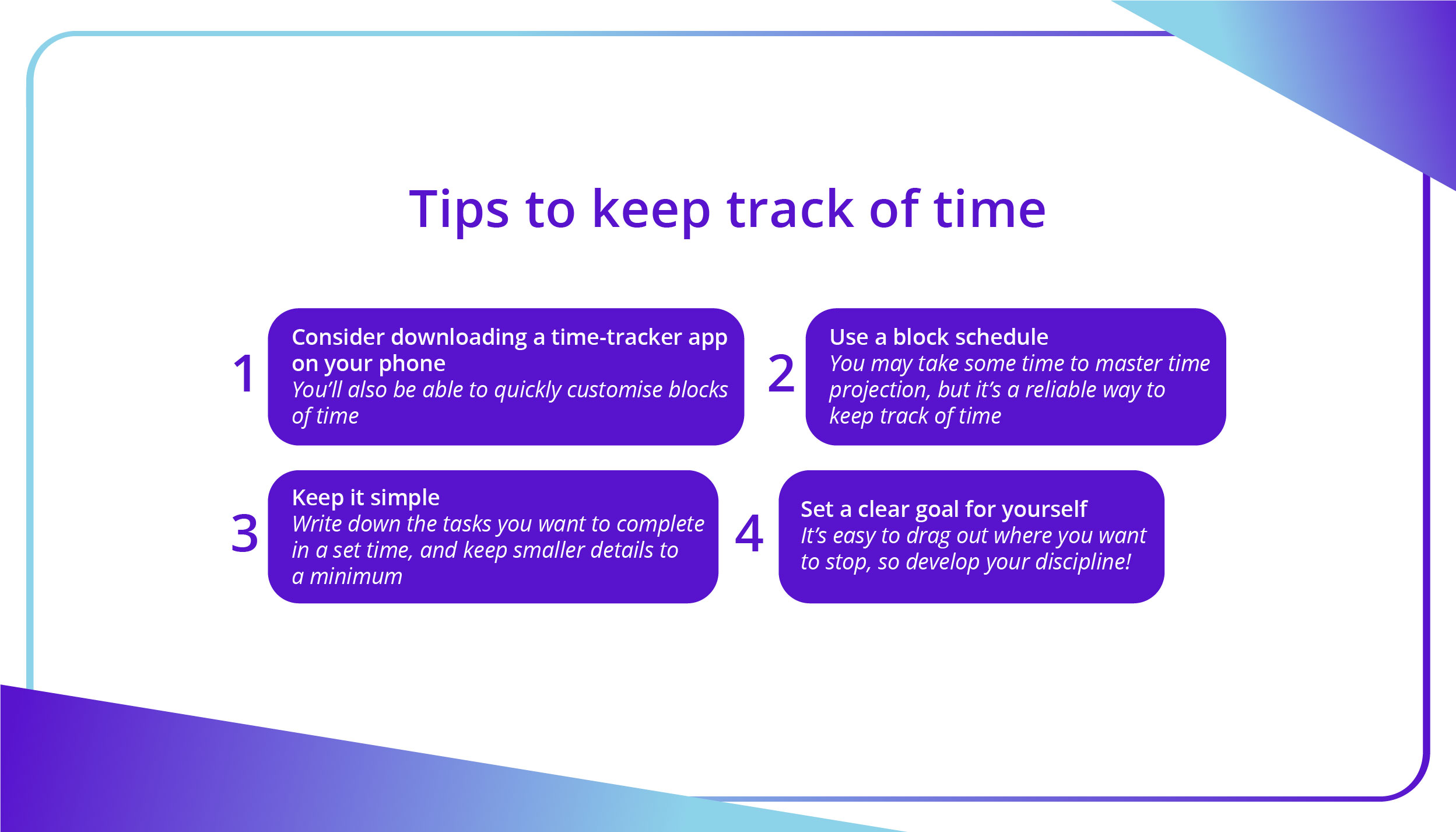
While firefighting is a crucial element in today’s fast-paced business landscape, it doesn’t necessarily have to be a panic-filled process with these tips!