
Imagine this: You’ve been working at your desk for the better part of eight hours, dead set on getting all your daily tasks out of the way and then some. But to your annoyance, as the day ends, you find that you’ve barely scratched the surface of your to-do list. Simply put, you weren’t being productive today, and you’re stuck with an even longer list to work on tomorrow.
Being productive is a crucial skill in the workplace, and also a common goal for employees to strive towards if they want to make any headway in their career journey. Yet, being productive at work is easier said than done. A study found that just 21% of employees believe they are consistently productive throughout a full workday; with the average productivity level at just under three hours. The remaining time is often wasted doing menial tasks, being distracted, or simply procrastinating.
But it doesn’t have to be that way. Here are a few techniques you can try out to help boost your productivity and regain control over your workday.
1. Set realistic goals
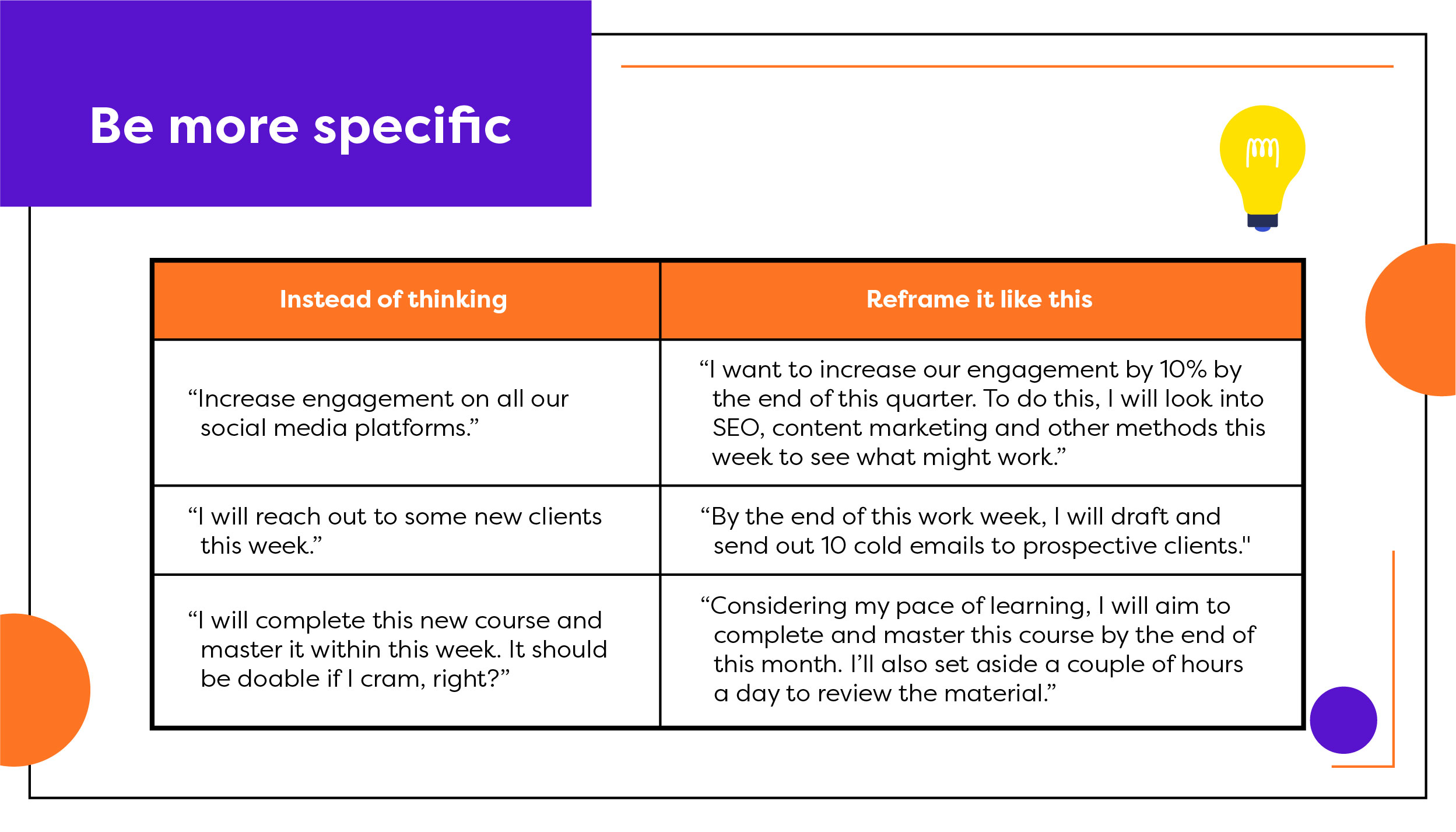
Being ambitious is great and all, but if your set goals are consistently out of reach, you'll just be setting yourself up for failure each time. This can eventually drain your motivation. Instead, take a look at your current tasks and compare them against the SMART framework:
Specific: Are they clear and well-defined?
Measurable: Can they be tracked and quantified?
Achievable: Are they realistic and within reach?
Realistic: Do they align with your overall objectives?
Time-bound: Do they have clear deadlines?
Following this guideline will give you a better idea on how you should approach the goals you’ve set for yourself to help you stay motivated and focused in turn.
2. Take those breaks
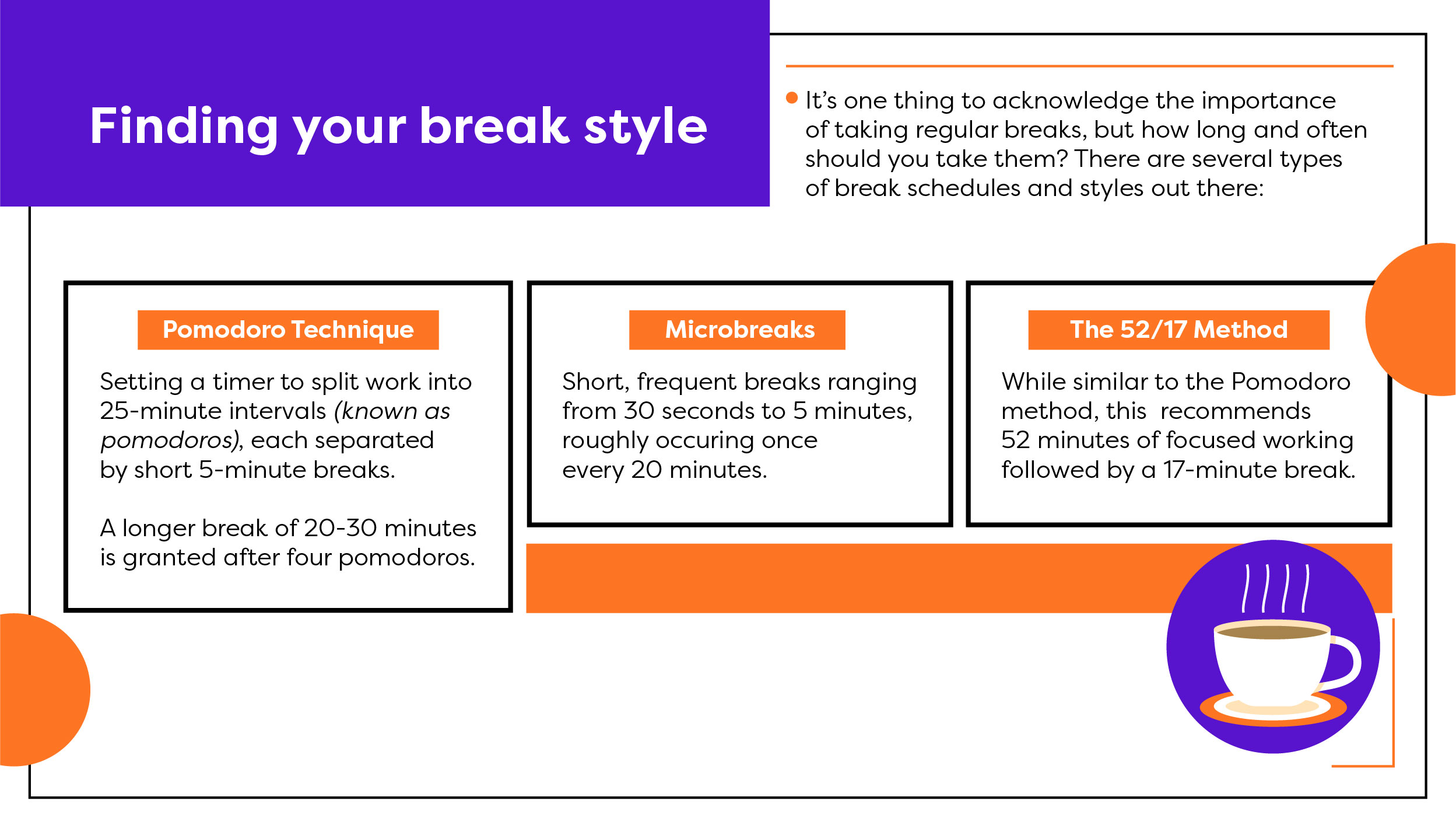
On paper, this seems counterproductive. After all, you won’t be getting anything done during those breaks. However, contrary to popular belief, there are benefits to indulging in some downtime at work.
For one, working for long stretches without pause can wear you out both physically and mentally. A break allows you to recharge as well as refresh your mind. In fact, studies have found that taking brief breaks from a task can vastly improve your focus, so don’t be afraid to take that breather when you really need it.
3. Learn to "eat frogs"
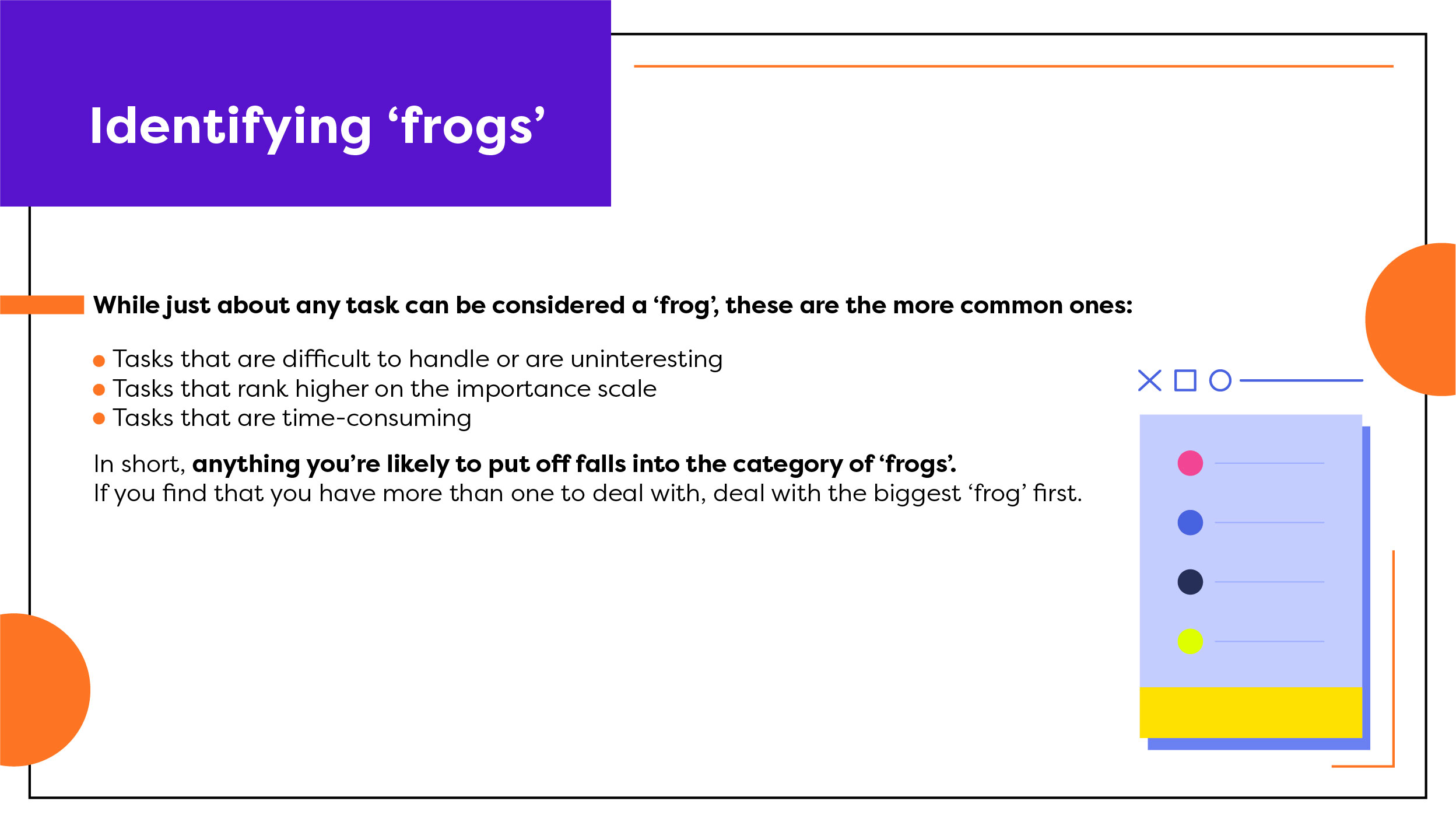
We all have that one unbearable, dreaded task on our to-do list that we keep putting off. At the same time, leaving it unaddressed will have it constantly looming over you, stressing you out and hurting your productivity.
This is where “eating the frog” comes into play. A quote by writer Mark Twain suggests that you should deal with the most important and dreaded task (AKA the ‘frog’) first thing in the morning before moving onto less crucial tasks. Once it's off your plate, the remainder of the day should be easier to handle. After all, nothing can be worse than eating a live frog, right?
4. Limit your distractions
Distractions are one of the biggest problems when it comes to productivity. They can be as simple as a coworker asking you a quick question or having to answer an incoming email. Tasks like these, at first glance, seem like a non-issue and no big deal, until you turn back to your laptop and realise that you’ve completely lost your initial train of thought.
In fact, studies have shown that it takes about 23 minutes for someone to regain their focus after being interrupted while being immersed in a task. Combine it with the number of times you could be pulled away from your work, those minutes can start to pile up. Before you know it, you’ve lost hours of valuable time.
5. Reconsider multitasking
Being able to juggle a variety of tasks at work looks good on paper, especially if you have a lot on your plate at once. However, it turns out that multitasking may not be as efficient as most people might think.
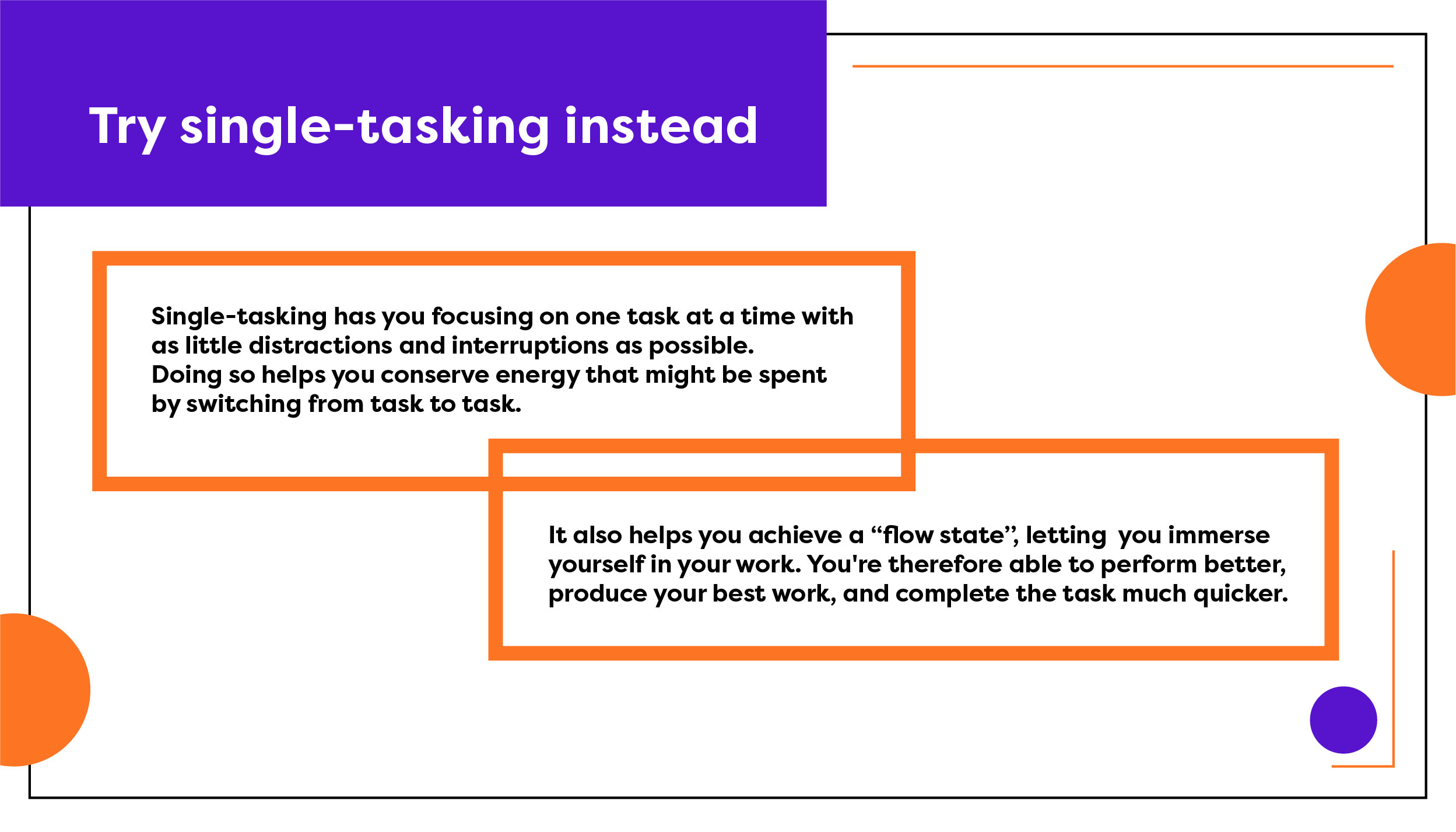
The problem starts when the tasks you need to work on all require conscious thought. For one, our brains aren’t geared for multi-tasking; rather, they’re actually frantically switching back and forth between tasks. Doing this frequently in a short span of time can be draining, thus affecting your cognitive focus. This inability to completely focus on a single task runs the risk of making more mistakes in general.
While there are plenty of tips and tricks out there to improve productivity beyond these suggestions, it’s important to remember that these shouldn’t be treated as quick fixes or instant hacks. Rather, instead of seeking out a surefire, one-size-fits-all method, it’s better to just try out and experiment with the different methods and techniques out there for yourself. So long as it works and you keep building up good habits, you’re taking the right steps towards being more productive.